
The Estrogen Insight: Why Blood Tests Don’t Always Reflect What’s Happening in Your Breast Tissue

Updated: Feb 24
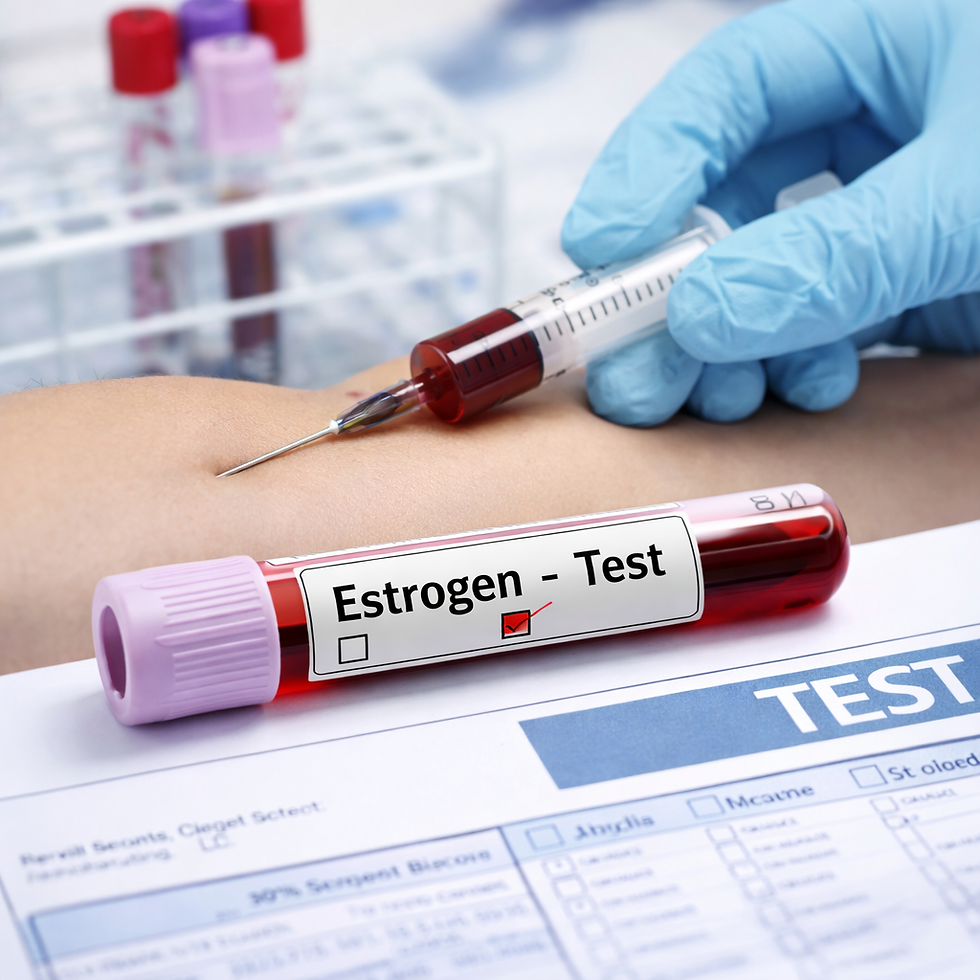
When it comes to understanding your hormone health, especially estrogen levels, traditional blood tests are often the first tool clinicians reach for. But what if those tests only tell part of the story? Recent research shows that hormone activity in specific tissues — like your breast tissue — may not always match what shows up in the bloodstream. This can have important implications for breast health and how we monitor hormonal balance.
What Blood Tests Tell You — and What They Miss
Blood tests measure hormone levels circulating at a single moment in time. While this information is useful, it may not always truly reflect what’s happening inside specific tissues — such as breast tissue — where hormones have their biological effects. Studies have found that hormone levels in breast tissue can differ from levels measured in blood, meaning blood tests sometimes underestimate actual hormone activity at the tissue level.
This matters because estrogen plays a key role in how cells behave. In breast tissue, estrogen can drive cell growth — a normal process — but prolonged high stimulation may contribute to abnormal cell changes over time.
How Tissue Hormone Activity Works
Estrogen enters breast tissue from the bloodstream, where it can bind to receptors and trigger cellular responses. In the breast, some tissue can even produce estrogen independently of circulating levels. This means that even when blood tests show normal or low estrogen, your breast tissue may still be experiencing significant hormonal stimulation.
In addition, environmental compounds that mimic estrogen — sometimes called xenoestrogens — can bind to estrogen receptors in tissues and contribute to estrogen‑like activity. These are not always captured by blood testing, making functional evaluation particularly informative.
Thermography’s Functional Perspective
Thermal imaging does not measure hormones directly, but it does capture functional changes in breast tissue circulation and heat patterns. When a region of tissue has increased metabolic activity, such as from hormone stimulation or inflammation, thermography may detect corresponding differences in temperature patterns.
This functional insight can be valuable because it reveals how your tissues are responding — not just what hormone numbers look like in the blood. Coupled with other clinical evaluation, thermographic patterns can help paint a more complete picture of your breast tissue’s physiological state.
Why This Matters for Breast Health
Understanding tissue‑level estrogen activity — rather than relying solely on blood hormone levels — is important for risk awareness and health planning. For example, if breast tissue shows signs of elevated functional activity, it may prompt deeper clinical evaluation, lifestyle changes, or a more tailored health plan.
Functional changes often occur before structural changes do, giving you and your provider an opportunity to explore preventive strategies earlier.
Tips for Supporting Healthy Hormone Balance
Here are some practical steps that can support balanced estrogen activity and overall well‑being:
Eat phytoestrogen‑rich foods like cruciferous vegetables (broccoli, cauliflower, cabbage). These plant compounds can gently modulate estrogen receptor activity.
Support liver detoxification — the liver helps metabolize hormones; foods like leafy greens, beets, and citrus can aid healthy metabolism.
Stay well‑hydrated and high in fiber, which supports elimination and reduces the chance of estrogen reabsorption.
Maintain an active lifestyle to support balanced hormone signaling and metabolic health.
Conclusion
Blood tests provide useful information about hormone levels, but they don’t always reflect what’s happening at the tissue level — particularly in hormone‑responsive tissues like the breasts. Thermography’s functional insights add a valuable layer of understanding by showing how your tissues are actually functioning. By combining multiple perspectives — clinical evaluation, functional imaging, and personalized lifestyle strategies — you can take a more empowered and proactive approach to your hormonal health.
Ready to Learn More About Your Hormonal Activity?
Schedule a thermal imaging scan today to gain deeper insight into how your tissue activity reflects your body’s hormonal balance. Early functional awareness can be a powerful step in personalized prevention and health optimization.


